BIRD Aerosystems
BIRD Aerosystems develops airborne missile protection and airborne surveillance and observation systems.
I built the FEA models for 9 airborne installation projects in FEMAP with NX Nastran and delivered their structural analysis, from preliminary sizing to certification, per FAR 23, FAR 25 and MIL-STD-810 requirements. All 9 projects went to the customers and flew, and the Q-Launcher also went into serial production.
Projects
9 projects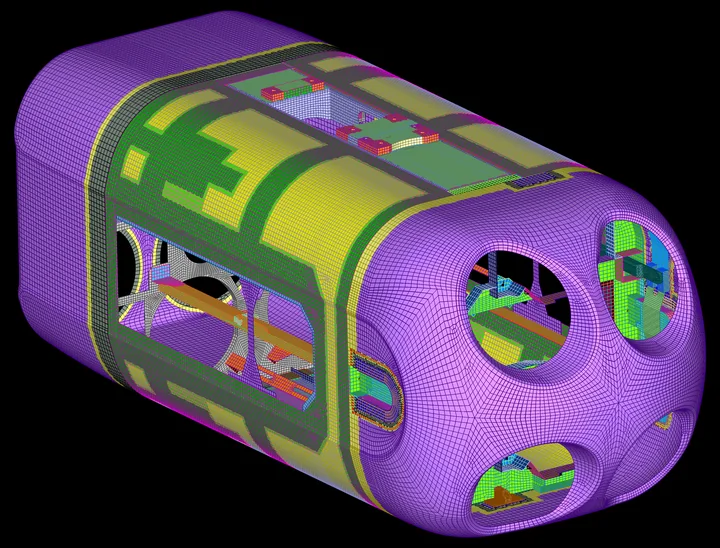
Q-Launcher
I validated my FEA model against the static test strains within 5%, and the launcher passed its tests, went to the customer and into serial production
View project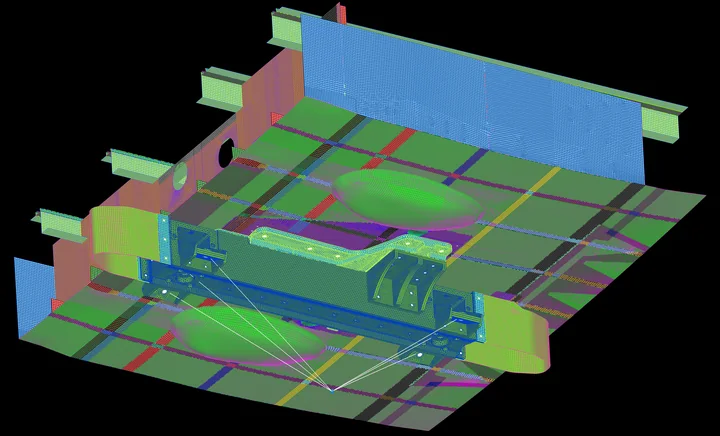
Beechcraft King Air 350 ASIO
I restored the strength of the original fuselage structure using a reverse engineering approach, and the aircraft flew with the ASIO system
View project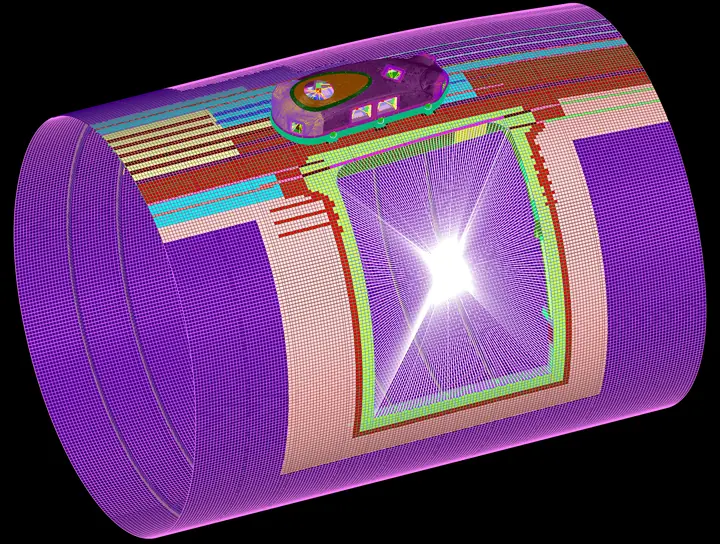
Airbus A319 AeroShield POD
I validated my FEA model against the static test strains within 7%, and the pod passed its tests, went to the customer and flew on the Airbus A319
View project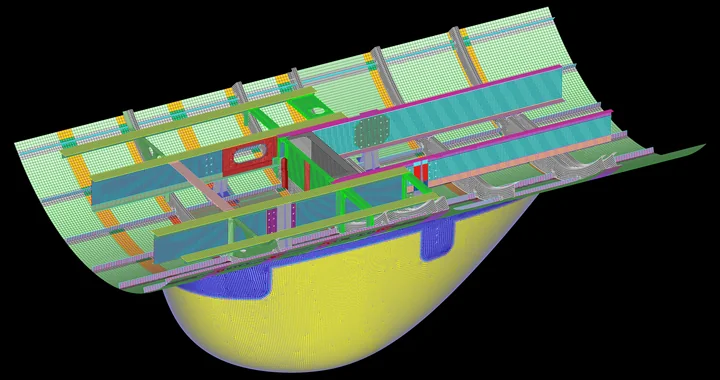
Cessna Citation 525B ASIO
I delivered the certification stress reports for the installation, including fatigue life and damage tolerance inspection intervals, and it flew
View project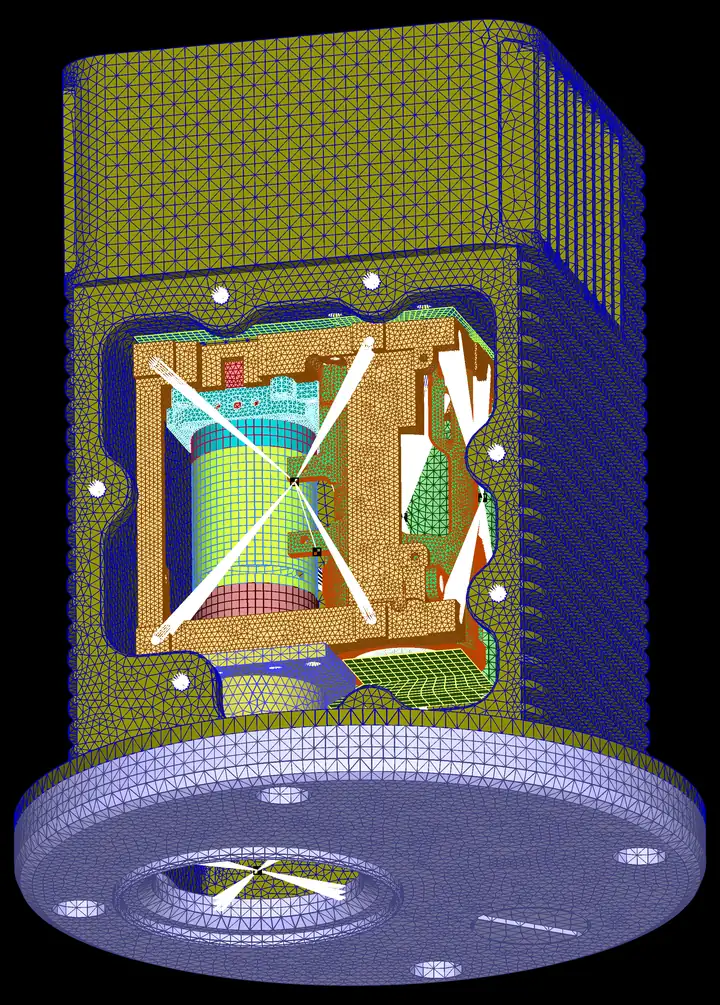
µEYE
I optimized the structure to keep the optics' displacement within tolerance, and the unit met MIL-STD-810 random vibration requirements
View project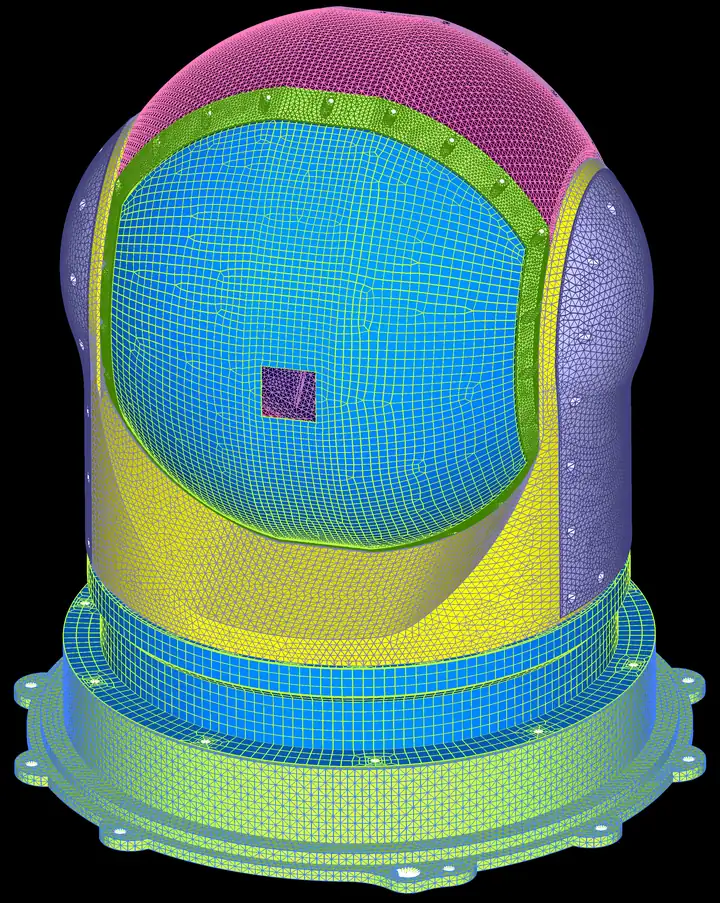
SPREOS
I predicted the natural frequencies that the frequency sweep test confirmed; the system met MIL-STD-810 random vibration requirements
View project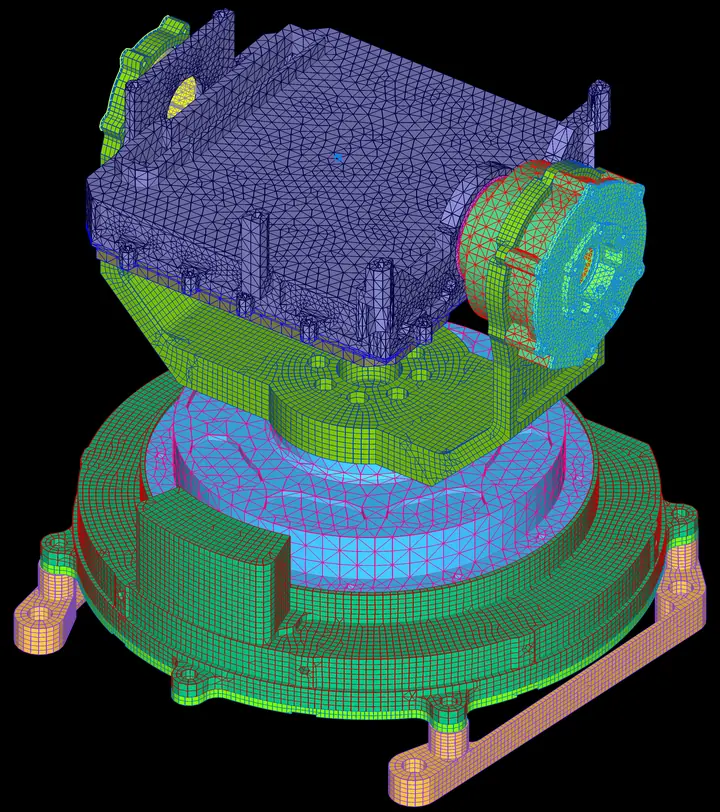
µMPR
I optimized the radar structure to keep its natural frequencies clear of the propeller excitation; the radar went to the customer and flew
View project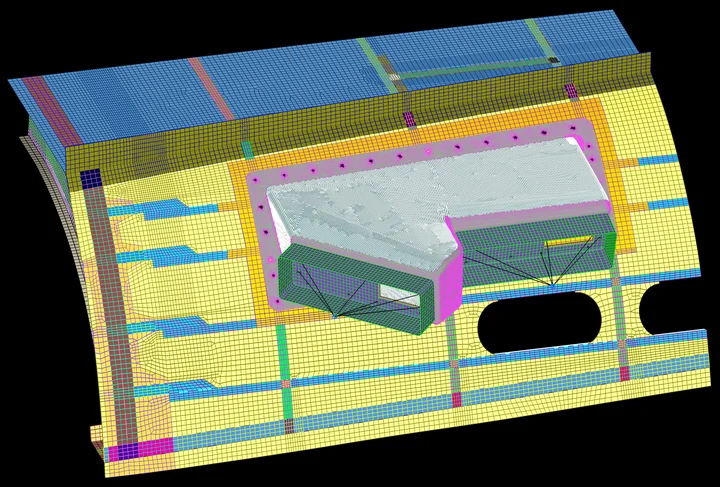
Mi-17 AMPS
I restored the original strength with a reverse engineering approach and kept the frequencies clear of the helicopter's excitation; the helicopter flew
View project
SPREOS optical module
I optimized the structure for stiffness and weight and kept the laser deflection angle within the optics tolerance; the module flew in the SPREOS system
View projectAnalysis tools I built

What I did
- Built FEA models for 9 projects in FEMAP with NX Nastran
- Verified my FEA models with hand calculations, mesh convergence and FEMAP API checks of element quality and mass
- Analyzed metallic and composite parts in linear and nonlinear static analysis, with large displacement, material plasticity and contact, and in buckling analysis
- Analyzed new installations on existing aircraft with a reverse engineering approach and showed that the original strength was restored
- Showed that the thermal stresses at the metal-to-composite joints of a honeycomb-core pod were within the allowables, and kept the thermal displacement of the optics and the laser deflection angle within tolerance
- Optimized the structures based on all structural analysis results, increasing their stiffness and cutting their weight, and kept the natural frequencies clear of the propeller and helicopter excitation
- Assessed how the bearing properties drive the overall stiffness of rotating mechanisms
- Analyzed transient and random response to vibration spectra, and showed that the units met the MIL-STD-810 random vibration requirements
- Calculated fatigue life from S-N curves, vibration fatigue with the Dirlik distribution and damage tolerance inspection intervals in NASGRO
- Defined the sensor and strain gauge locations for the static, vibration and shock qualification tests and validated my FEA models in them: all structures passed, static test strains within 5 to 7% of the analysis
- Delivered certification stress reports for the installations per FAR 23, FAR 25 and MIL-STD-810
- Developed 36 FEMAP API scripts that made my FEA work twice as fast on all 9 BIRD projects, automating the random response analysis, fastener modeling, model checks and presentation slides
- Presented my stress analyses to customers at PDR (Preliminary Design Review) and CDR (Critical Design Review), and defended my reports against their comments
- Mentored junior stress engineers on FEA model building